


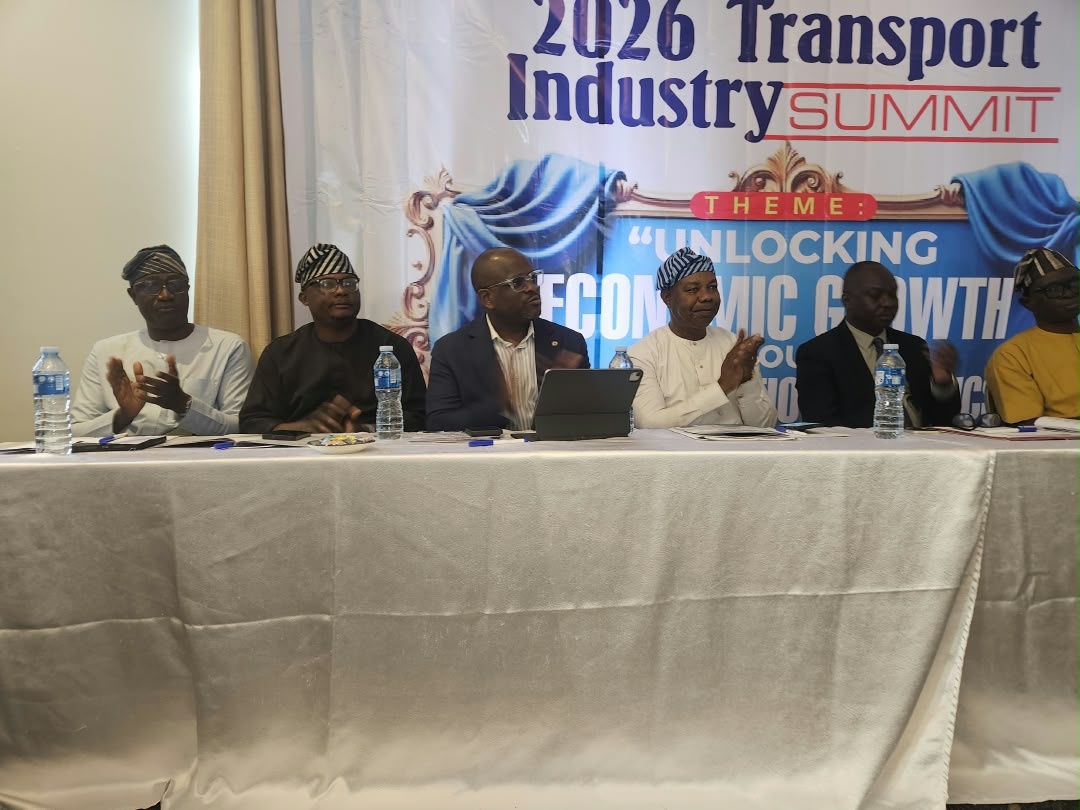
The Federal Government has announced plans to modernise six major seaports across Nigeria as part of efforts to reduce cargo-handling delays, lower logistics costs and strengthen the country’s trade competitiveness.
The Minister of Marine and Blue Economy, Dr Adegboyega Oyetola, disclosed this on Thursday at the 2026 Transport Industry Summit of the Transport Correspondents Association of Nigeria (TCAN) in Lagos.
Oyetola, represented by the Director of Inland Transport Services, Nigerian Ports Economic Regulatory Agency (NPERA), Paul Garnuwa, said the programme, approved by President Bola Ahmed Tinubu, would cover Apapa and Tin Can Island ports in Lagos, Onne and Rivers ports, Calabar Port and Warri Port.
He said the modernisation would involve reconstruction of quay walls, deepening of port channels to accommodate larger vessels, replacement of obsolete cargo-handling equipment and further digitalisation of terminal and gate operations.
According to him, the initiative is designed to expand port capacity, improve vessel turnaround and cargo handling, and ensure that Nigeria’s maritime gateways meet the demands of modern international trade.
Speaking on the summit theme, “Unlocking Economic Growth Through Transportation Logistics,” Oyetola said port efficiency was critical to the wider transport chain, including roads, rail, inland waterways, warehouses and distribution networks.
He noted that delays at the ports affect manufacturers awaiting raw materials, exporters, transport operators, distributors and consumers, adding that the modernisation programme would deliver shorter vessel turnaround times, more predictable cargo movement and a more competitive trading environment.
Oyetola said Nigeria’s port reforms were already receiving international recognition, citing the 2025 Container Port Performance Index by the World Bank and S&P Global Market Intelligence
He disclosed that Tin Can Island Port ranked 10th, while Lagos Port Complex, Apapa, ranked 12th among the world’s 20 most improved container ports between 2020 and 2025.
Oyetola said the gains must be sustained through continued investment and reforms, adding that Nigeria also recorded a major maritime security milestone in August 2026 with the removal of the United States Coast Guard’s Conditions of Entry on vessels arriving from Nigeria, ending 12 years of additional security requirements.
According to him, the development followed efforts to strengthen compliance with the International Ship and Port Facility Security Code, improve access controls and address security gaps.
The Minister also disclosed that the Federal Government was working with state governments and private-sector partners on deep seaport projects in Akwa Ibom, Bayelsa, Cross River, Ogun, Ondo and Rivers states.
He said the projects would expand port capacity, create new maritime and logistics corridors, ease pressure on existing ports and bring economic activities closer to coastal communities.
Oyetola identified the enactment of the NPERA Act 2026 as another major reform, saying the agency would provide a permanent framework for regulating tariffs and charges, service standards, competition and protection of port users.
He stressed that infrastructure alone could not reduce logistics costs without improved security, technology, regulation and coordination across the transport system.
“Our immediate priority is to ensure that the investments and institutional changes now underway translate into practical improvements: faster cargo movement, improved vessel turnaround, greater capacity, stronger security, transparent regulation and lower logistics costs,” Oyetola said.
He called for collective support from the private sector, financial institutions, development partners, state governments and industry associations, while urging transport journalists to sustain informed reporting and constructive scrutiny of government policies and projects.
Also speaking at the summit, the Technical Adviser to the Vice President on Transportation, Logistics and Innovation, Segun Obayendo, called for accelerated reforms to integrate road, rail, waterways, ports and other modes of transportation.
Obayendo said Nigeria could not fully unlock its economic potential while transportation remained fragmented, citing delays, multiple checkpoints, insecurity, poor coordination and informality in the road transport sector as major contributors to the high cost of doing business.
He urged Nigeria to learn from countries such as Singapore, Germany and China, where transportation infrastructure is integrated with broader economic development.
“Most of their automation-wise, intelligent transport systems, if you ask me, I would say they are leading in terms of automation and ITS,” he said of Singapore.
Obayendo advocated a system where commuters could plan and pay for journeys involving different transport modes through a single platform.
“When you have one ticket, you should be able to book your journey across the different modes. That is what multimodality is talking about,” he said.
He cited Germany’s Hamburg port as an example of how technology, data and coordinated logistics could improve cargo movement, while linking China’s economic growth to sustained investment in transportation infrastructure and connectivity.
“China is the economic powerhouse of the world. How did they attain that economic powerhouse? It is transportation,” he said.
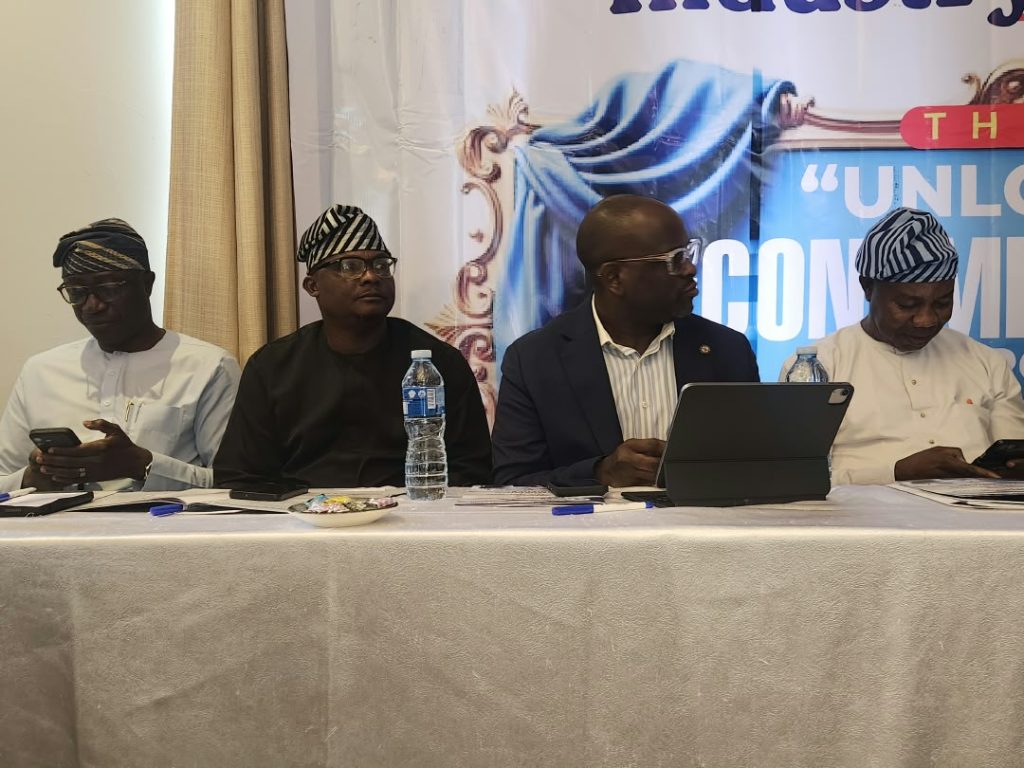
Obayendo said delays and other inefficiencies ultimately increase consumer prices because additional costs incurred by businesses are passed on to consumers.
“If I were an importer and my goods are delayed for a week or two when they are supposed to move freely, whatever is the cause of that delay would be added to the final price,” he said.
He called for greater use of rail and inland waterways and said the National Land Transport Policy was designed to address fragmentation by providing a framework for coordinated development of roads, railways and inland waterways.
On road transportation, he said the sector required “huge transformation,” including standardisation, professionalisation, stronger operating procedures and greater formalisation.
Obayendo stated that the government was working on frameworks to make transport projects more bankable and attract financing, noting that the challenge was not always a lack of funds but the absence of structures capable of managing investments effectively.
“The era of lamentation is gone. I am now part of the government, so if I lament, who am I lamenting to? I am here to take action,” Obayendo said.
He also disclosed plans to expand Compressed Natural Gas infrastructure, including efforts to establish at least one standard CNG station in each of Nigeria’s 774 local government areas through private-sector participation.
He said the government also planned more organised road transport terminals where passengers could book journeys electronically, undergo security checks and access scheduled services.
On insecurity and vandalism, Obayendo stressed the need for public cooperation and inter-agency collaboration, saying, “The whole system must be able to work together.”
Lagos to Invest €410m in Omi-Eko Water Transport Project
Meanwhile, the Lagos State Government, said it was implementing the €410 million Omi-Eko project to establish a modern and integrated inland waterways transportation system.
The Special Adviser to the Governor on Blue Economy, Oluwadamilola Emmanuel, said the project would complement the state’s urban mobility system, improve connectivity for waterfront communities and expand access to economic opportunities.
He said more than 540,000 people currently live in waterfront communities, with many depending on water transportation for mobility, livelihoods and economic activities.
According to him, the project was informed by congestion, rising transport costs, limited road space, environmental concerns and inadequate connectivity.
“Water transport can provide alternative corridors and reduce journey times,” Emmanuel said, citing the Ikorodu-Falomo route, where a journey that can take more than an hour by road could be completed in about 25 to 30 minutes by water.
He said the five-year project followed a two-year pre-feasibility study supported by the Agence Française de Développement and involved the European Investment Bank, AFD, European Union and Lagos State Government.
Emmanuel said the financing would comprise €170 million from the European Investment Bank, €130 million from AFD, a €60 million EU grant, €40 million from the Lagos State Government and €10 million expected from private-sector participation, particularly in the ticketing system.
He said the project would establish 15 structured ferry routes, dredge about 140 kilometres of waterways, upgrade 25 ferry terminals and provide 78 modern electric ferries capable of carrying up to 440 passengers.
The project, he added, would provide passenger facilities, fleet maintenance infrastructure, improved navigation channels and climate-resilient infrastructure.
Emmanuel said a Vessel Industry Transition Programme was being developed to integrate informal operators into the formal water transportation system through integration or buyout arrangements.
He stressed that safety remained central to the programme, with emphasis on regulatory enforcement, crew competence, vessel standards and emergency preparedness.
According to him, Lagos’ future mobility must be multimodal, with water transportation integrated with rail, buses, private vehicles and park-and-ride facilities to address first- and last-mile connectivity.
He said a recent study identified 34 additional maritime communities requiring better connectivity, adding that integrated water transport would reduce pressure on roads, promote cleaner mobility and create maritime, green and blue economy jobs.
The Nigerian Railway Corporation also called for stronger integration of rail, road and maritime transportation to reduce logistics costs, boost trade and unlock economic growth.
The NRC’s Managing Director and Chief Executive Officer, Dr Kayode Opeifa, represented by his Special Adviser on Media, Yinka Aderibigbe, also said an efficient integrated transport system was critical to reducing the cost of doing business and connecting producers to markets.
Opeifa said Nigeria needed a transportation network in which rail, road, maritime, inland waterways and aviation complement one another rather than operate in isolation.
He said rail had a particularly important role because of its capacity to move large volumes of passengers and bulk freight over long distances, thereby reducing pressure on highways and facilitating the movement of agricultural produce, petroleum products, containers and other commodities.
According to him, the NRC was focused not only on passenger transportation but also on strengthening freight operations and improving connections between rail lines, seaports, inland dry ports, industrial centres and major economic corridors.
On funding, Opeifa called for stronger public-private partnerships to bridge infrastructure and investment gaps.
“Government alone cannot provide all the infrastructure and investment required,” he said, urging greater private-sector investment in rolling stock, freight terminals, logistics hubs and related infrastructure.
He also called for a regulatory environment that supports efficiency and innovation and urged government, security agencies, host communities and the public to protect railway infrastructure from vandalism and encroachment.
The NRC chief executive stressed that transportation must remain affordable and accessible, saying improved mobility provides access to jobs, markets, education and other opportunities.
“Therefore, investment in transportation is ultimately an investment in the productivity and wellbeing of Nigerians,” he said.
Opeifa reaffirmed the corporation’s commitment to developing a modern, integrated and efficient railway system, while commending TCAN for providing a platform for dialogue among policymakers, operators, investors, professionals and the media.
He expressed optimism that sustained investment, innovation, collaboration and effective policy implementation would help build a transportation and logistics system capable of supporting Nigeria’s economic aspirations.
Awards were also presented by the Transport Correspondents Association of Nigeria, TCAN, led by its Chairman, Tola Adenubi, to ten deserving dignitaries, stakeholders and organisations at the 2026 TCAN’s summit held in Ikeja.
