


Unlike many other states in Nigeria, virtually every sector in Lagos State faces enormous pressure, largely because of its rapidly growing population.
Every day, thousands of people from different parts of Nigeria, Africa and beyond migrate to Lagos in search of better opportunities.
This influx continues as the administration of Governor Babajide Sanwo-Olu pursues policies aimed at expanding the state’s economy and creating opportunities for residents and newcomers alike.
Lagos’ economic growth, which has made it one of Africa’s largest economies, is a testament to its enduring appeal. However, this growth also comes with significant infrastructure challenges.
Just as a beehive attracts bees, the expanding economy continues to draw more people to the state, placing increasing demands on its roads, schools, hospitals, housing and other essential services.
Despite these mounting pressures and the absence of a special federal allocation specifically dedicated to meeting Lagos’ exceptional infrastructure needs, the situation is not without hope.
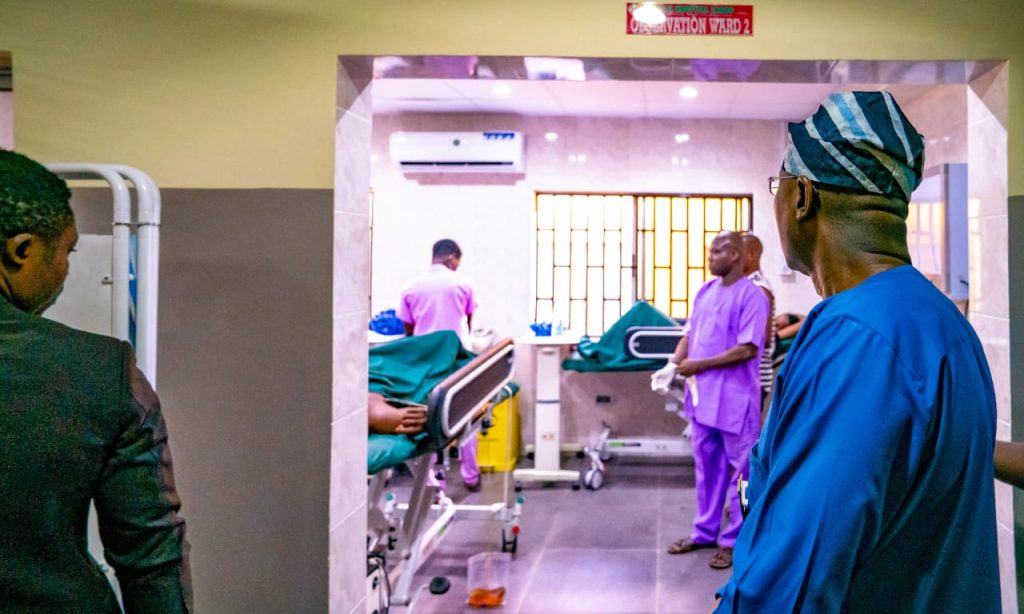
The state government continues to explore innovative ways to maintain and expand infrastructure within the limits of available resources.
These sustained efforts have helped keep essential services running despite the enormous demands placed on them.
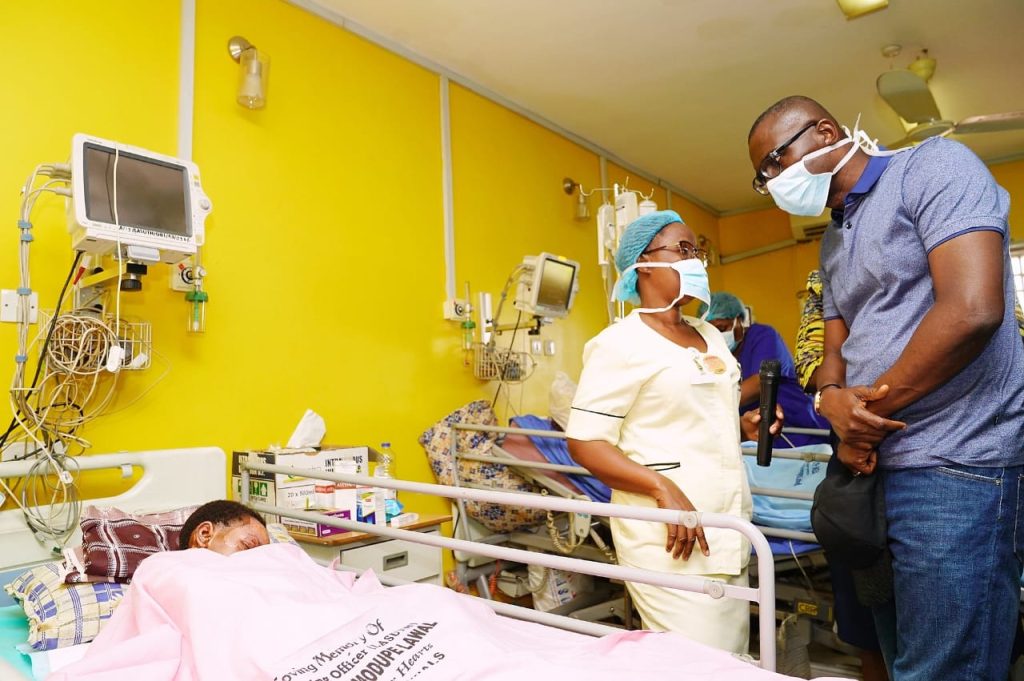
In recent times, some Lagos residents have expressed concerns about the state’s healthcare system, particularly following isolated incidents at one or two public health facilities. Like education, transportation and housing, the health sector is grappling with the consequences of a rapidly expanding population.
Although the government continues to establish new facilities and upgrade existing ones, the pressure remains intense, compounded by the nationwide shortage of medical professionals and the persistent migration of healthcare workers abroad.
The few doctors, nurses and other health professionals available in the system are therefore required to serve an enormous number of patients, creating a challenging situation that demands urgent and sustained attention.
These are realities many Lagos residents understand, even though some critics appear to overlook the scale of the challenges, including those who may not regularly depend on public healthcare facilities.
The World Health Organisation (WHO) has clarified that there is no single doctor-to-patient ratio applicable to every country, as healthcare systems differ in their organisation, financing and workforce capacity. Nevertheless, the Nigerian Association of Resident Doctors (NARD) has reported that Nigeria’s doctor-to-patient ratio is approximately one doctor to more than 9,000 patients.
The situation in Lagos could be even more challenging because of its unusually large and constantly growing population.
The migration of Nigerian-trained doctors to foreign countries has further compounded the problem. Approximately 15,692 Nigerian-trained medical doctors reportedly practise in the United Kingdom, making Nigerians one of the largest groups of foreign-trained doctors in the country.
Estimates also put the number practising in the United States at about 20,000, while thousands more work in Canada, France and other European countries.
These figures underscore the scale of Nigeria’s healthcare workforce challenges. The continued loss of skilled professionals has weakened the country’s capacity to provide adequate medical services, placing additional pressure on the health systems that remain operational.
Against this backdrop, the Sanwo-Olu administration’s investments in healthcare infrastructure, hospital expansion, modern medical equipment and workforce development deserve recognition.
Without sustained investment, the pressure on public hospitals in Lagos would likely be considerably worse.
One of the administration’s major projects is the newly constructed Massey Street Children’s Hospital, built on approximately 4,000 square metres of land to improve access to quality healthcare for children.
Described as the largest children’s hospital in West Africa, the facility represents a significant addition to the state’s paediatric healthcare infrastructure.
The new Ojo General Hospital is another important development. Strategically located to serve residents of Ojo and neighbouring communities, the facility is expected to improve access to healthcare, particularly for people living along the Badagry axis.
The government has also embarked on the construction of a major psychiatric healthcare facility in Epe, an investment aimed at strengthening mental healthcare and expanding access to specialised services.
Similarly, the continued development and upgrading of facilities at the Lagos State University Teaching Hospital (LASUTH), Ikeja, are intended to enhance the institution’s capacity to provide specialised and advanced medical care.
Other interventions include the renovation and upgrading of general hospitals in Somolu, Odan-Lagos and Isolo, as well as improvements to the Ebute-Meta and Ketu-Ejinrin health centres, among several other facilities.
The state has also established 10 triage and oxygen centres and activated COVID-19 oxygen treatment and sample collection centres to strengthen its emergency healthcare response.
In addition, its health insurance scheme has reportedly extended coverage to approximately one million Lagos residents, representing another important step towards improving access to healthcare.
Beyond infrastructure, the government has invested in professional training and capacity development for healthcare personnel.
These initiatives demonstrate that improving healthcare requires more than constructing hospitals; it also demands qualified personnel, modern equipment, adequate funding and efficient service delivery.
Under the supervision of the Commissioner for Health, Professor Akinola Abayomi, the state has pursued various healthcare development initiatives over the past seven years of the Sanwo-Olu administration.
Nevertheless, the existence of these investments does not mean that every challenge in the sector has been resolved.
In a complex and densely populated state such as Lagos, persistent gaps in healthcare delivery must be acknowledged and addressed.
However, isolated shortcomings should not automatically be interpreted as evidence that the government has done nothing.
Equally, the existence of government projects should not be used to dismiss legitimate complaints from residents who encounter difficulties accessing medical services.
Rather than resorting to sweeping condemnation, residents and stakeholders should identify specific shortcomings, provide verifiable evidence and draw the government’s attention to areas requiring urgent intervention.
Criticism is most useful when it is objective, constructive and motivated by a genuine desire to improve public services.
The Sanwo-Olu administration and the Ministry of Health must, in turn, remain responsive to legitimate concerns and continue strengthening the state’s healthcare system.
Past interventions demonstrate the administration’s capacity to initiate projects and respond to emerging needs, but sustained attention to service delivery, staffing shortages and patients’ experiences remains essential.
As Indian Prime Minister Narendra Modi once observed, “People’s participation is the essence of good governance.”
Governance is, indeed, a shared responsibility. While the government must provide effective leadership, adequate infrastructure and quality public services, citizens also have a responsibility to engage constructively, demand accountability and contribute meaningfully to the search for solutions.
For Lagos to build a stronger and more accessible healthcare system, government investment must go hand in hand with public participation, objective criticism and continuous improvement.
The ultimate goal should not be to defend or condemn the government at all costs, but to ensure that every resident has better access to timely, affordable and quality healthcare.
Steve Omolale is a seasoned journalist and writes from Lagos.
