


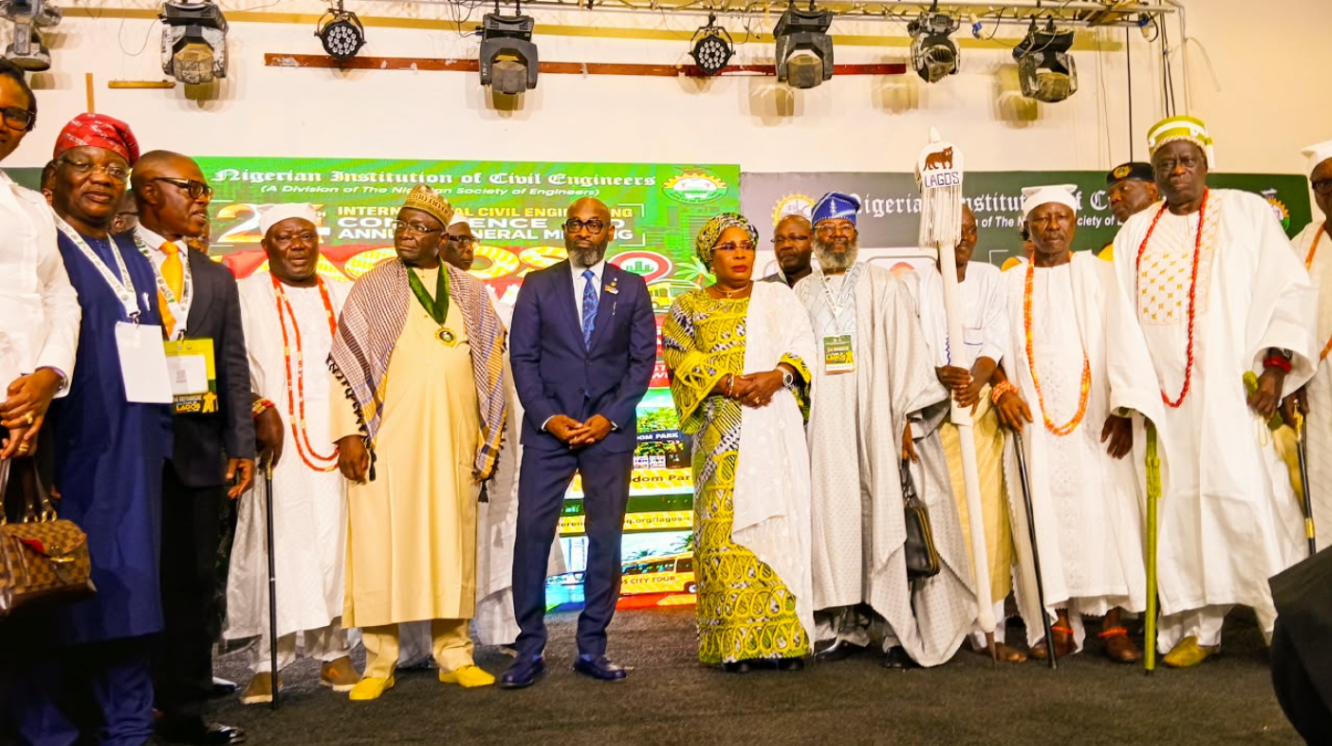
The Lagos State Government has urged civil engineers to ensure infrastructure was properly designed, adequately maintained and resilient to the conditions it is expected to withstand.
Governor Babajide Sanwo-Olu, represented by his Special Adviser on Infrastructure, Olufemi Daramola, said this when he declared open the 24th International Civil Engineering Conference and Annual General Meeting, “This Is Lagos 2026,” themed: Civil Engineering: Sustainable and Resilient Infrastructure for Economic Growth”.
The Governor who received an award with other dignitaries also said the Lagos State Government had approved the dredging and maintenance of 28 additional primary drainage channels following flood risk projections highlighted in the 2026 Annual Flood Outlook.
Addressing industry leaders, policymakers, and engineering professionals at the event, Governor Sanwo-Olu emphasized that while government capital expenditure such as the state’s significant allocations toward modernizing transit and infrastructure corridors, remains robust, physical investment alone is insufficient.
He said “Dredging must be complemented by the strict enforcement of development setbacks, drainage easements, proper design standards, and expanded system capacities to handle stormwater safely”.
Combating Building Failures and Enforcing Compliance both state leadership and engineering heads placed heavy emphasis on building safety and professional responsibility.
Governor Sanwo-Olu urged civil engineers to serve as frontline guardians of public safety by proactively reporting illegal construction activities and structural defects to relevant authorities.
He also reiterated that decisions concerning compromised building including controlled demolitions, such as the planned actions for fire-damaged structures on Lagos Island must be strictly guided by rigorous professional assessments.
President of the Nigerian Institution of Civil Engineers, Ali Rabiu, advocated a deliberate strategy for building national competence by the use of indigenous materials, local expertise, home-grown technologies, domestic manufacturing capacity and content.
According to him, “Nigeria stands at a critical point in its development journey. Our aspirations for economic diversification, industrial expansion, urban renewal, food security, employment generation and improved living standards depend, to a considerable extent, on the quality, availability and resilience of our infrastructure.”
“We must acknowledge that our development ambitions are being pursued within a challenging economic environment characterised by competing demands on public resources, rising construction costs and the urgent need to maximise the value of every investment” he said.
The National Chairman of the Institution, Engineer Tokunbo Ajanaku, and delegates at the three day conference which they was well attended by engineers across the country commended the Federal and Lagos state governments in their stride in infrastructure development.
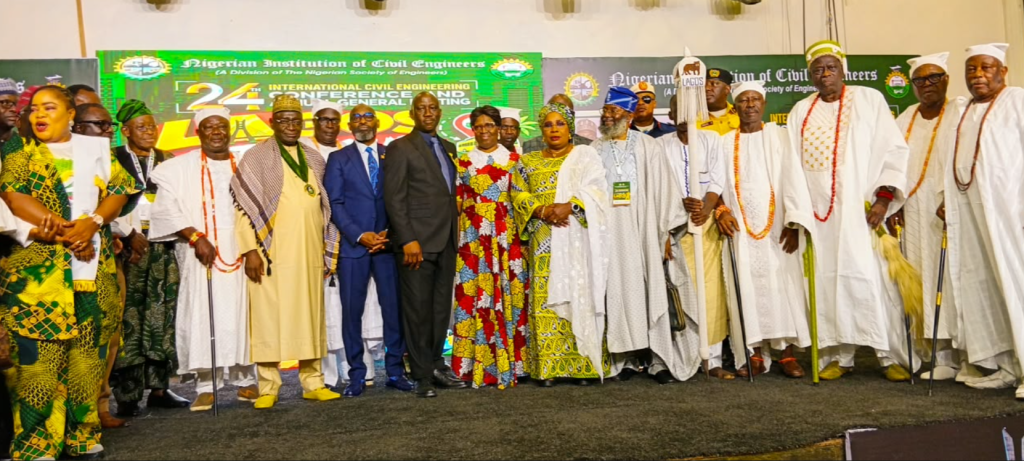
In a keynote Address, National Chairman of the Nigerian Institution of Highway and Transportation Engineers, Bola Mudasiru, said the engineers must move beyond a culture of construction but stewardship urging them to let the conference be a commitment to design with courage, build with integrity, inspect and maintain with discipline, finance with vision and plan for climate reality.
At the event which had in attendance traditional rulers and featuring, Gala night among other activities, he advocated a paradigm shift from a “culture of construction” to a “culture of stewardship.”
Dr. Mudasiru stressed that past climatic averages can no longer guide modern engineering. With rainfall intensifying and coastal pressures rising, he argued that infrastructure must be engineered to withstand future environmental extremes rather than historical norms.
”We can no longer design only for the averages of the past; we must design for the extremes of the future,” Dr. Mudasiru stated, warning that ignoring preventive maintenance results in deferred costs, structural degradation, and severe safety hazards.
Dr Mudasiru reinforced this stance, reminding professionals that engineering negligence translates directly to a compromise on human life.
He urged practitioners to insist on tested construction materials, transparent governance, and sound lifecycle planning to ensure that public investments translate into lasting economic assets.
The conference concluded with a call for closer collaboration between government agencies and professional bodies to turn expert recommendations into practical, actionable policies that secure Lagos’ urban future.
