


The Lagos State Government has restated its commitment to tackle persistent power outages, with plans to increase electricity supply to about 3,500 megawatts (MW) through coordinated improvements in generation, transmission, distribution and metering.
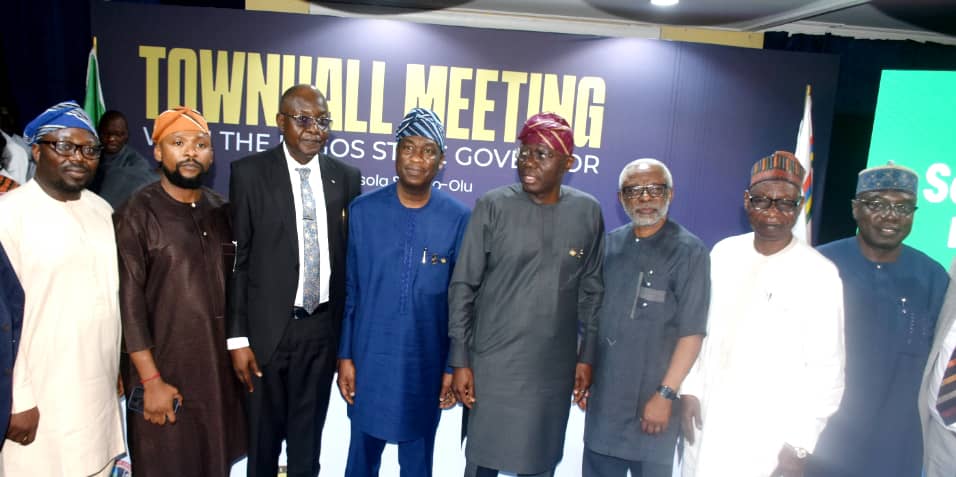
The commitment was announced at the Lagos State High-Level Strategic Power Town Hall held at Lagos House, Marina, where federal and state officials, regulators and power sector operators met to chart a path towards a more reliable electricity supply.
Representing the Minister of Power, Baba Mustapha, Director of Distribution Services, said Lagos requires more than 6,000MW to meet demand but currently receives far less from the national grid.
He noted that boosting generation alone would not solve the problem without expanding transmission and distribution infrastructure, identifying gas supply, network capacity and metering as critical priorities.
Mustapha stated that Lagos has already secured 400MW from private power producers and urged continued investment in gas-fired, embedded and renewable energy projects.
Governor Babajide Sanwo-Olu called for stronger collaboration among stakeholders, smart metering, improved data management, stricter enforcement and better revenue assurance to restore consumer confidence and attract investment.
The Governor proposed a review meeting in five to six months to assess progress on the agreed commitments.
Commissioner for Energy and Mineral Resources, Abiodun Ogunleye, said the state was determined to end what he described as a “culture of blackout.”
He stated that although the Transmission Company of Nigeria (TCN) has about 3.5GW of wheeling capacity, Lagos currently receives less than 1GW from the national grid.
According to him, the state’s immediate target is to add about 2GW to existing supply, bringing available electricity closer to 3.5GW and improving power to homes and industries across the state.
On electricity tariffs, Ogunleye insisted that consumers should only pay for improved service, stressing that residents “must not be made to pay for darkness.”
Speaking on the broader reform agenda, the Special Adviser to the President on Power and Chairman of the Presidential Taskforce on Power Sector Reset and Restoration, Doctor Rilwan Babalola, said Nigeria’s electricity challenge extends beyond adding megawatts.
He described Lagos as the ideal testing ground for the proposed Clean Lagos Electricity Market (CLEM), which is designed to introduce demand aggregation, bilateral contracting, open access, payment assurance and transparent settlement.
Babalola said the initial 500MW phase must demonstrate that electricity can be reliably generated, transmitted, metered and paid for before the model is expanded.
He added that the ultimate goal of the Power Sector Reset is to move Nigeria “from megawatts announced to electricity delivered, from government interventions to functioning markets, and from managing scarcity to building a sustainable electricity industry.”
