



The Lagos State Government says it is set to address the growing challenges posed by abandoned buildings and the consequential security and environmental menace through a coordinated inter-agency approach.
The State government’s major aim is to ensure availability of more habitable housing units, strengthen public safety, promote sustainable urban development and make certain the implementation of existing laws on abandoned properties across the State.
To advance this objective, the Lagos State Ministry of Housing, convened an inter-agency stakeholders’ meeting at the Ministry’s Conference Room at Alausa Secretariat, Ikeja.
The meeting brought together heads of Ministries, Departments and Agencies (MDAs) with direct responsibilities for housing regulation, physical planning, public safety, law enforcement, environmental management, public health, community development and regulatory enforcement.
The Permanent Secretary, Lagos State Ministry of Housing, Engineer Abdul-Hafis Toriola, described abandoned buildings as a complex urban challenge with far-reaching implications for security, environmental health, neighbourhood development and the overall wellbeing of residents.
“Our collective mandate is to protect Lagosians through effective collaboration built on professionalism, accountability and respect for the law. Our objective is not simply enforcement; it is to restore safety, improve neighbourhoods, preserve property values and ensure that every community reflects the vision of a Greater Lagos,” he added.
According to him, the meeting was convened to strengthen institutional collaboration, clarify statutory responsibilities among relevant agencies, review existing legislative provisions, harmonise operational strategies and develop a coordinated framework for enforcement, compliance monitoring and information sharing.
He noted that the initiative also aligns with the THEMES Plus Development Agenda of Governor Babajide Sanwo-Olu’s administration, particularly in the areas of urban renewal, housing, governance and safer communities.
He further stressed that no single agency could effectively address the challenge in isolation, adding that collaboration founded on professionalism, accountability and respect for the rule of law remains essential to achieving lasting results.
The Permanent Secretary of the Lagos State Primary Health Care Board, Doctor Ibrahim Mustafa highlighted the public health implications of abandoned buildings, including their use as breeding grounds for mosquitoes, rodents and other disease vectors.
The representative of the Commissioner of Police in Lagos State, CSP Uche Gabriel, noted that abandoned buildings frequently serve as hideouts for criminal activities, including armed robbery, cultism, drug trafficking and kidnapping, assuring all stakeholders of the Police readiness to provide operational and intelligence support.
During the meeting, the General Manager of the Lagos State Building Control Agency (LASBCA), Florence Gbaye, presented the outcome of the Agency’s statewide assessment of abandoned buildings.
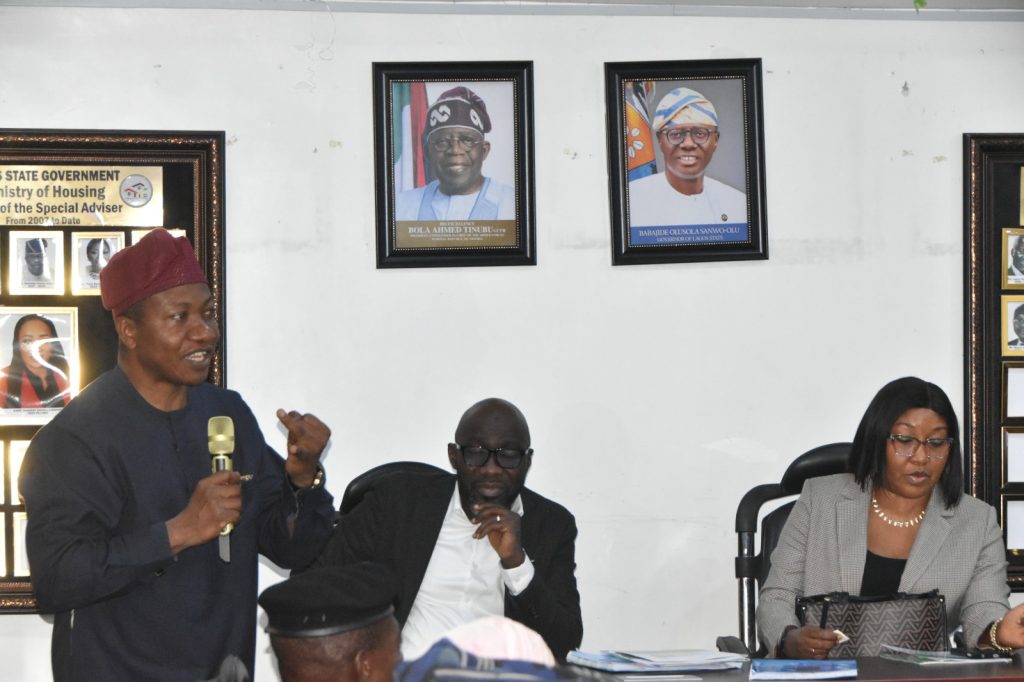
Gbaye said as of 20th June 2026, LASBCA had identified 759 abandoned buildings across all Local Government Areas and Local Council Development Areas in the State.
She explained that the assessment classified the structures according to their construction status, structural condition, years of abandonment, number of floors and geographical spread, identifying Ayobo-Ipaja, Amuwo-Odofin, Ikorodu Central, Ajeromi-Ifelodun and Lagos Mainland among the areas with the highest concentration of abandoned buildings.
Gbaye warned that many of the structures pose significant security, environmental and public health risks and recommended the issuance of statutory notices to property owners for rehabilitation, completion and lawful utilization of the affected properties.
The stakeholders also reviewed the enforcement blueprint anchored on Sections 37 to 43 of the Lagos State Real Estate Regulatory Authority (LASRERA) Law, 2022, which provides the legal framework for addressing abandoned properties that constitute public nuisance or pose threats to public safety.
In a major highlight of the parley, the General Manager of the Lagos State Neighbourhood Safety Corps (LNSC), Doctor Ifalade Oyekan, formally presented a comprehensive community-generated inventory of abandoned buildings across all Local Government Areas and Local Council Development Areas for integration into planning and enforcement framework.
At the end of the meeting, participants resolved to deepen inter-agency collaboration through continuous information sharing, harmonisation of existing datasets, joint inspections, coordinated enforcement operations, periodic review meetings and sustained public enlightenment campaigns.
They also agreed that all enforcement activities would strictly comply with relevant laws and due process, while intelligence generated by the Lagos State Neighbourhood Safety Corps would be incorporated into Government planning.
