


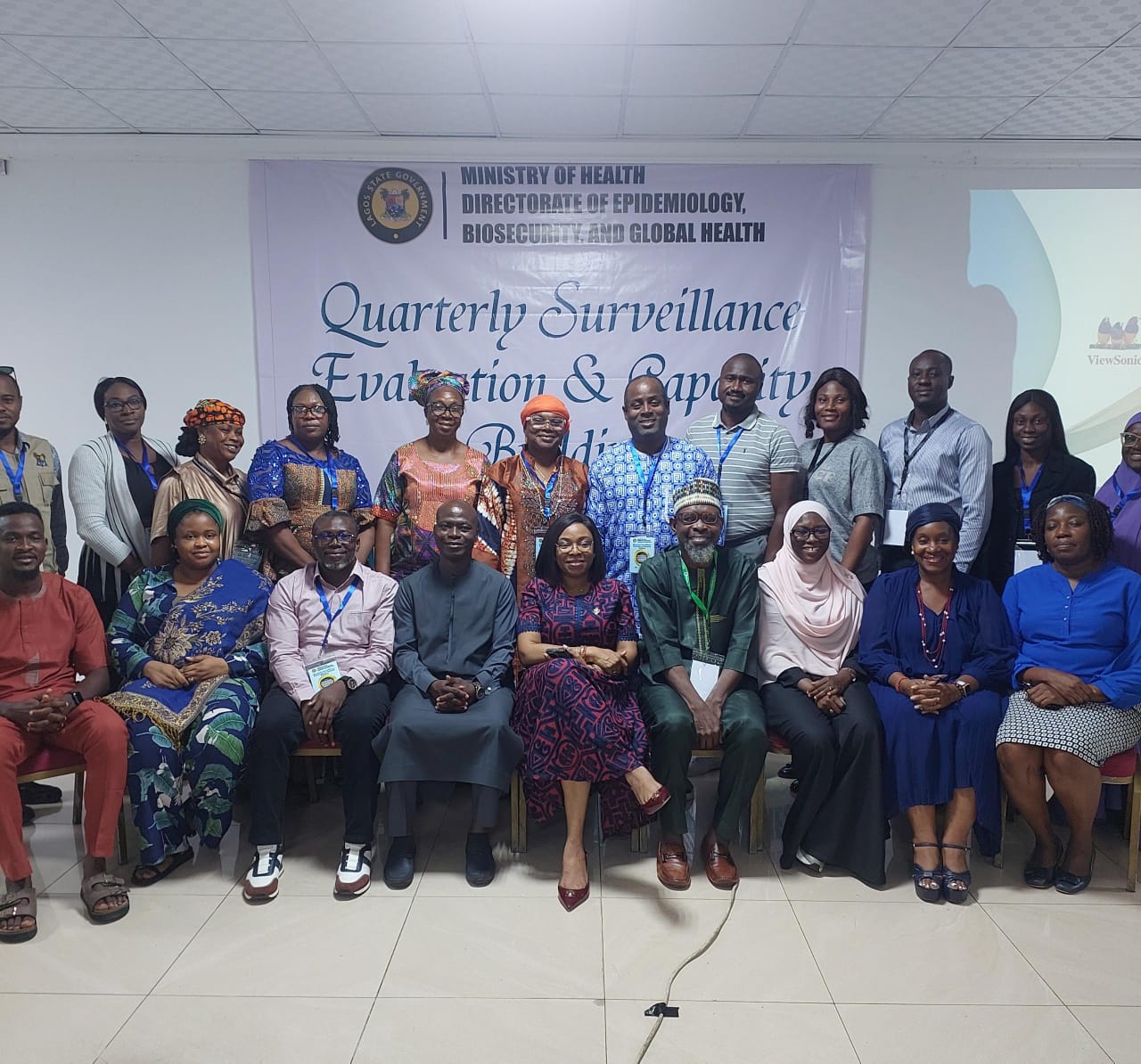
DSNOs Hail Hands-On, Case-Based Training Model.
Lagos – The Lagos State Ministry of Health is sharpening its outbreak response capacity with a four-day hands-on evaluation and training for Disease Surveillance and Notification Officers (DSNOs).
The Quarterly Surveillance Evaluation and Capacity Building programme, themed:“From Data to Action: Hands-on Surveillance Evaluation Using Case-Based Approaches,” at Lekki, drew frontline DSNOs, public health experts, lab scientists, and development partners from April 22 to 25, 2026.
Permanent Secretary Doctor Dayo Lajide, who visited the training charged officers to translate surveillance data into rapid response. “You are truly the first point of alert in our system,” she said. “The transition from data collection to actionable intelligence remains central to effective public health interventions.”
Lajide thanked Governor Babajide Sanwo-Olu for supporting the programme, noting that in-person training must be maximized despite funding and logistical constraints. She conveyed greetings from Health Commissioner Prof. Akin Abayomi and Special Adviser Doctor Kemi Ogunyemi.
She stressed adherence to proper reporting channels to trigger timely action at district and state levels, and warned that poor information management could spark public anxiety during outbreaks.
“We may be doing a lot of work, but without proper dissemination of information, the public remains uninformed,” She added that Trained public affairs officers, are key to risk communication.
Director of Epidemiology, Biosecurity and Global Health, Doctor Ismail Abdus-Salam, called the programme a Lagos flagship. According to Abdus-Salam,“We strive to be the first, and we are proud to be the only state organizing this kind of programme,” He said “the training reinforces learning through repetition while introducing innovations, including the shift from paper-based to electronic surveillance and better data communication to policymakers”.
State’s DSNO, Lakunle Openiyi, said the focus was practical skills using real-time case scenarios. “The goal is to ensure surveillance data is effectively utilized to guide timely and evidence-based public health decisions at both community and state levels,” he said.
Participants praised the model. Ibeju-Lekki DSNO Samson Omotesho said the case-based approach gave clearer insight into outbreak detection and response. Somolu DSNO Adebukola Adeniji cited improved data analysis and reporting accuracy. Both urged sustained training at local government and facility levels to strengthen grassroots surveillance.
Surveillance and Disease Control Programme Officer at the Lagos State Primary Health Care Board, Dr. Modinat Akiolu, called surveillance the eyes and hands of the health system.
“Imagine missing the detection of an outbreak in your community and the number of lives that could be affected. This highlights the importance of your role,” Akiolu said.
She noted that surveillance goes beyond data to include leadership, problem-solving, and service delivery.
The programme is expected to strengthen Lagos’ capacity for early detection, reporting, and response to public health threats.
