


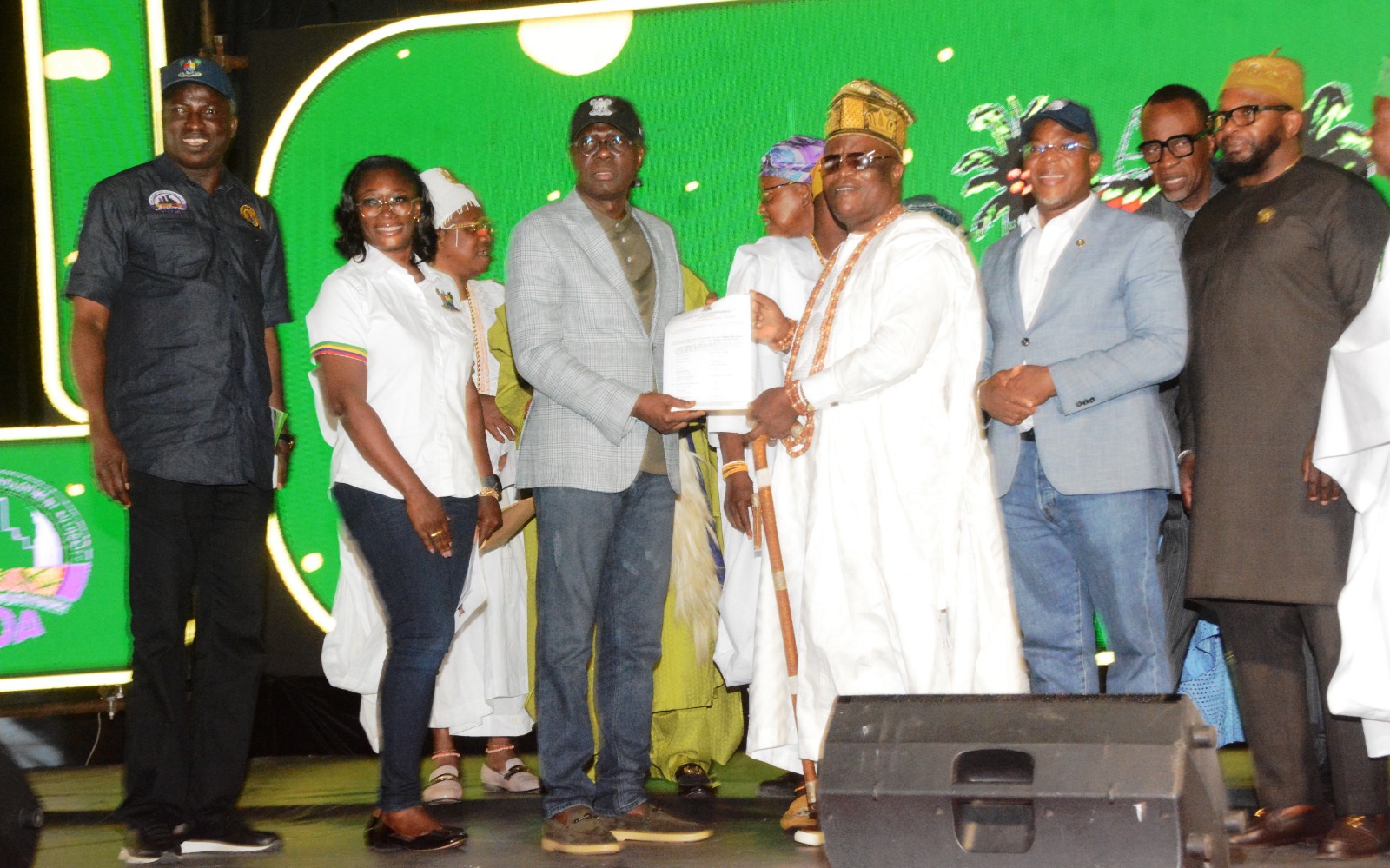
The Lagos State government has presented Land Allocation letters to ninety eight villages within Ito-Omu and other communities in the Sangotedo area of Lekki, while assuring residents of its commitment to inclusive development.
The allocation, which covers Ito Omu and adjoining communities along the Eti-Osa, Ibeju-Lekki and Epe growth corridor, forms part of the state’s efforts to integrate indigenous settlements into its long-term physical development plan.
Speaking during the presentation ceremony, Sanwo-Olu described the exercise as a major milestone in recognising communities with deep historical roots in the area and securing their place in Lagos’ future development.
According to him, the communities have contributed significantly to the social, cultural and economic life of Lagos through fishing, farming, trading and other traditional occupations.
He said the government began consultations in 2020 with traditional rulers, Baales, community leaders, religious leaders and residents, followed by detailed mapping, site inventory surveys and the preparation of a comprehensive development plan through the Lagos State New Towns Development Authority.
The Governor explained that the allocation letters represent more than official documents, noting that they serve as formal recognition of the communities and an assurance that they will not be left behind as development expands across the Lekki and Ibeju-Lekki axis.
“The future of Lagos cannot be built on unplanned expansion. It must be built on deliberate planning, appropriate infrastructure, secure communities and opportunities for our people to prosper,” he said.
Sanwo-Olu stated that the development plan would guide residential, commercial, industrial, institutional and recreational land uses, enabling the provision of infrastructure, attraction of investment and improvement in residents’ quality of life.

He assured beneficiaries that the state government would continue to invest in roads, bridges, drainage systems, social infrastructure and water transportation facilities, including plans to develop the Ito Omu Water Jetty to improve connectivity in the area.
The Governor urged residents to preserve the integrity of their communities and resist the temptation to convert the allocations into land-selling ventures.
“We must stop the mistakes that were made before. Let us see real development coming into this neighbourhood. Let us see good road networks, drainage infrastructure, bridges and jetties. Let us create real value,” he said.
Sanwo-Olu added that the government’s vision is to transform Ito Omu into a major development hub comparable to, and potentially surpassing, the growth witnessed in Lekki.
Permanent Secretary, Lagos State Lands Bureau, Kamar Olowoshago, said the presentation fulfilled a commitment made by the state government to ensure that host communities remain direct beneficiaries of development projects within the corridor.
He noted that the allocation followed extensive engagement with stakeholders and demonstrated the government’s determination to carry indigenous communities along in its development agenda.
Olowoshago also highlighted the governor’s recent approval of more than ₦3.1 billion in compensation to project-affected persons across the state, describing the gesture as evidence of a responsive and people-centred administration.
Speaking on behalf of the beneficiaries, Chairman of Ibeju-Lekki Local Government, Sesan Olowa, described the exercise as a historic moment that would secure the future of communities within the rapidly developing corridor.
According to him, the allocation would strengthen the foundation for orderly development, improved security and sustainable prosperity while ensuring that indigenous residents remain integral to the area’s future growth.
Olowa, whose family was among the beneficiaries, expressed gratitude to the state government for recognising communities that have occupied the area for generations.
He said the initiative would unlock economic opportunities and facilitate the integration of local communities into Lagos State’s broader development framework.
The beneficiaries drawn from 98 communities are expected to work with government agencies to facilitate the implementation of the development plan and ensure orderly growth across the project area.
