


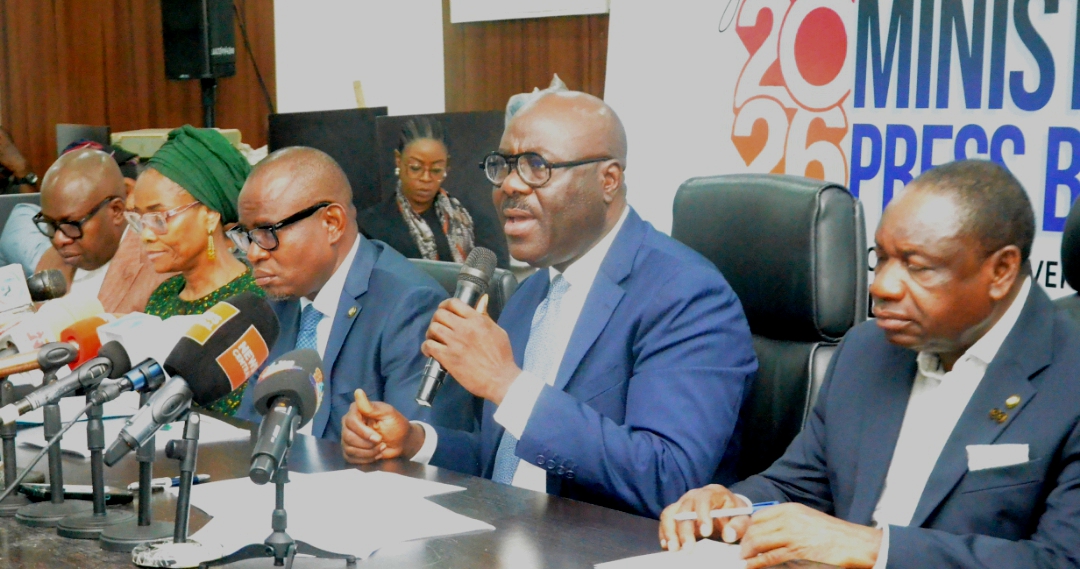
The Lagos State Ministry of Finance says it has continue to leverage technology, sustained fiscal discipline to absorb external shocks and strengthen revenue systems to support the state’s economic growth, despite ongoing global meltdown.
Speaking at the annual Ministerial Press Briefing at Alausa, Ikeja, Commissioner for Finance, Abayomi Oluyomi, said the ministry remained central to delivering the THEMES+ agenda by managing revenues, controlling expenditure, and developing alternative funding options.
The briefing marked the seventh year of Governor Babajide Sanwo-Olu’s administration.
Oluyomi said “the ministry’s work across fiscal policy, debt management, procurement, pensions, and tax administration had enabled the state to generate additional revenue and maintain prudent financial management”.
He noted that “the Lagos Revenue Portal had been expanded to more ministries, departments, and agencies, and that the 2025 audited financial statements were completed on schedule.”
Oluyomi said the ministry’s work across fiscal policy, debt management, procurement, pensions, and tax administration had enabled the state to generate additional revenue and maintain prudent financial management.
According to the Commissioner, the Lagos Revenue Portal had been expanded to more ministries, departments, and agencies, and that the 2025 audited financial statements were completed on schedule.
He said the ministry reported no defaults on debt repayment obligations in 2025 as Pension obligations were also met to ensure timely payment to retirees while Staff welfare and capacity building were sustained, and ongoing verification of the security personnel payroll helped prevent leakages.
Oluyomi outlined the structure of the “Finance Family,” which includes the Debt Management Office, State Treasury Office, Lagos Internal Revenue Service, Lagos State Public Procurement Agency, Ibile Holdings, and the Lagos State Lotteries and Gaming Authority, among others.
The Commissioner also said Lagos, with an estimated GDP of over Two hundred fifty nine billion dollars in purchasing power parity terms, remains Nigeria’s financial hub and one of Africa’s largest subnational economies.
He reaffirmed the ministry commitment to transparency, staff welfare, and maintaining industrial harmony across its agencies.
